Dry Needling
What Is Dry Needling?
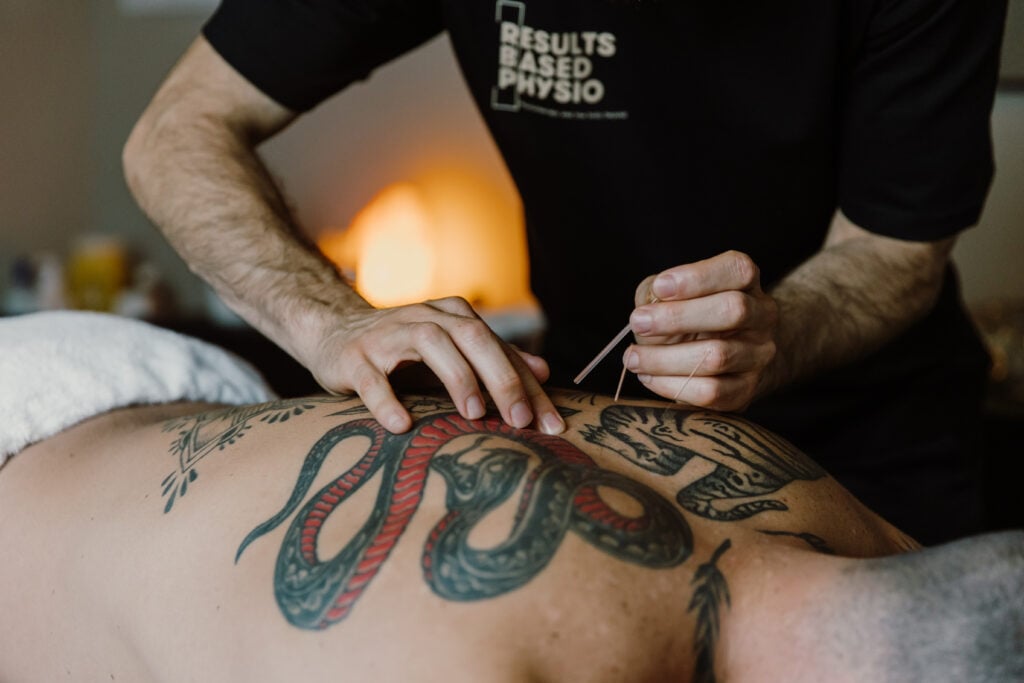
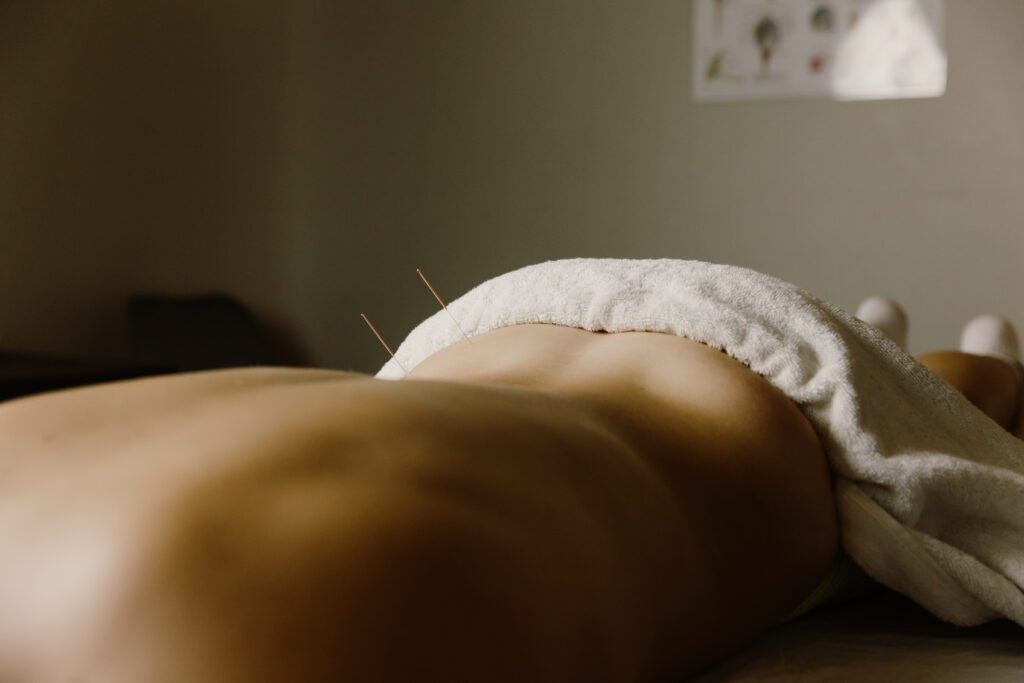
Dry needling is a form of manual therapy that uses fine, sterile needles to release tight muscles and relieve pain. It shares its origins with acupuncture in ancient Chinese medicine — a practice used for thousands of years to treat musculoskeletal pain and a range of other ailments — but today’s dry needling is a modern, evidence-informed technique applied within physiotherapy to target muscular dysfunction directly.
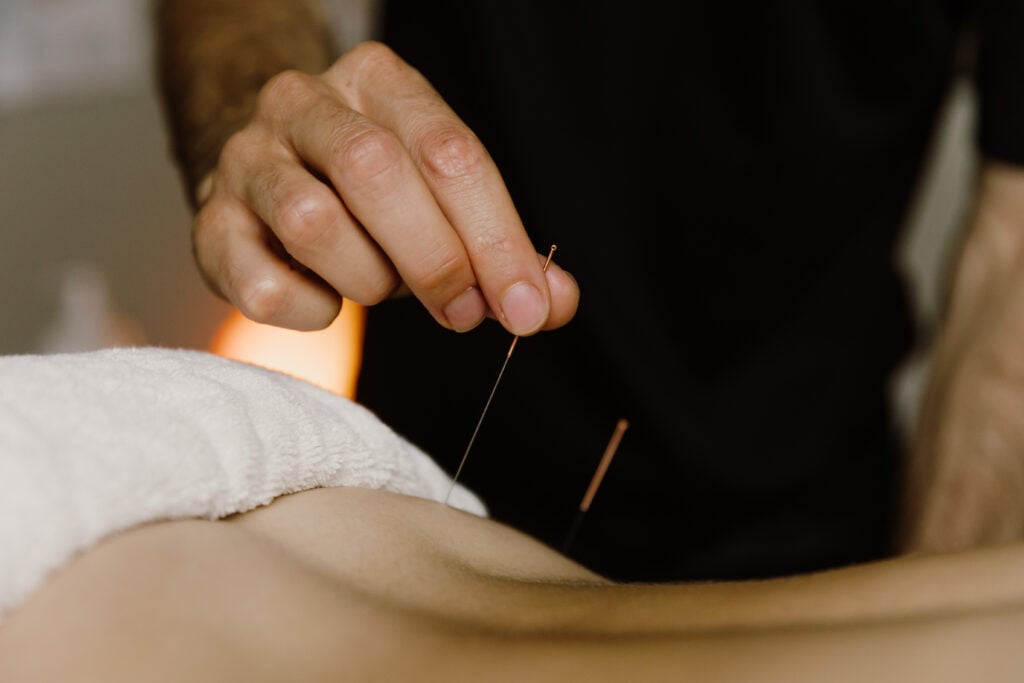
How Does Dry Needling Work?
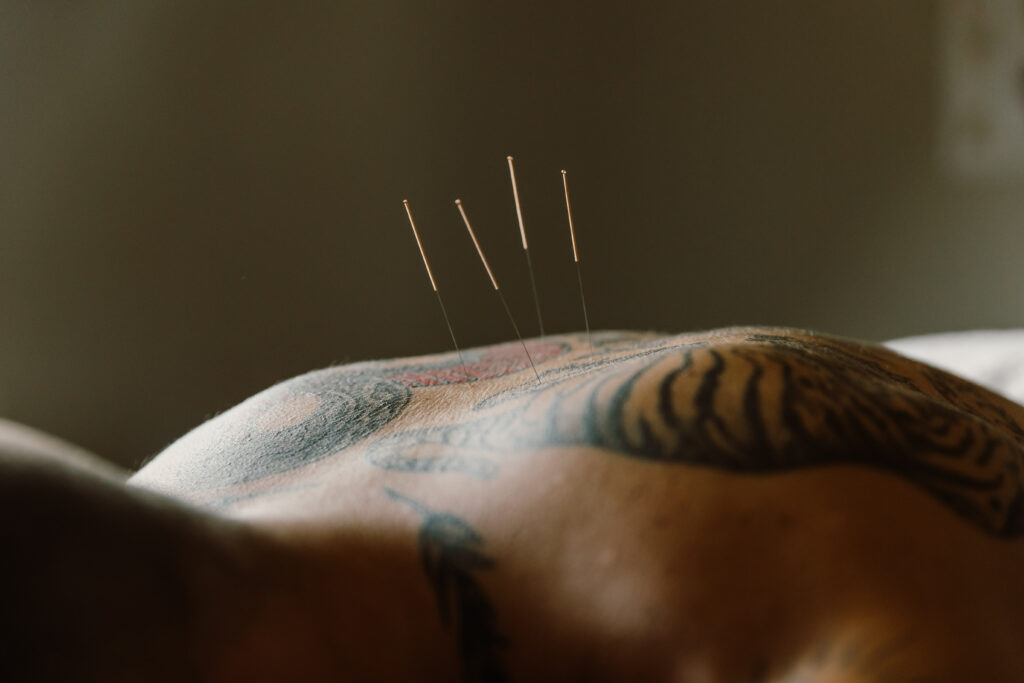
Think of dry needling as achieving what a deep tissue massage does — but from the inside. Instead of applying pressure to the surface of the skin, a thin needle is inserted directly into the dysfunctional muscle or myofascial trigger point (the technical term for a tight, painful “knot”). This lets us stimulate deeper structures that hands alone can’t always reach, kick-starting the body’s natural healing response right at the source of the problem.
Why Dry Needling Is So Effective
Dry needling creates a stronger inflammatory response than most other forms of manual therapy. That might sound like a downside, but it’s actually the point — a controlled inflammatory response is what triggers the body to begin healing, drawing blood flow, oxygen and nutrients to the treated area. This makes dry needling one of the most powerful ways to initiate recovery, which is why we often use it for stubborn muscle tightness and pain that hasn’t responded to other approaches.
Why We Use Dry Needling at RBP
Dry needling is one of the most common treatments we use at Results Based Physio — and for good reason. It’s relatively pain-free, highly efficient, and one of the most powerful manual therapy techniques available. When you want a fast, effective way to release deep muscular tension and get the healing process moving, few treatments do it better.
The needles themselves are fine, sterile filament needles — the same type used in acupuncture. They’re slim, thin, and far less confronting than most people expect, and come in different lengths depending on the area and depth being treated, so your physiotherapist can tailor the approach to exactly what your body needs.
What Does Dry Needling Feel Like?
Most people are surprised by how fine the needles are — far thinner than the needles used for injections or blood tests, so insertion is often barely felt. You may notice a brief twitch or a deep ache as the muscle responds, which is completely normal and usually a sign the treatment is working. Mild soreness afterwards, similar to post-exercise muscle soreness, typically settles within a day or two.
Why We Use Dry Needling at RBP
Dry needling is one of the most common treatments we use at Results Based Physio — and for good reason. It’s relatively pain-free, highly efficient, and one of the most powerful manual therapy techniques available. When you want a fast, effective way to release deep muscular tension and get the healing process moving, few treatments do it better.
The needles themselves are fine, sterile filament needles — the same type used in acupuncture. They’re slim, thin, and far less confronting than most people expect, and come in different lengths depending on the area and depth being treated, so your physiotherapist can tailor the approach to exactly what your body needs.
Who Can Benefit from Dry Needling?
Dry needling can help a wide range of people — not just elite athletes. If you’re dealing with muscular tightness, stubborn knots, or pain that sits deeper than a massage can comfortably reach, you’re likely a good candidate.
We commonly use dry needling for people experiencing muscle tension and trigger points, sports injuries and overuse conditions, neck and back pain, headaches related to muscle tightness, restricted movement or stiffness, and the aches that build up from long hours at a desk or repetitive work. It’s just as effective for the weekend runner and the office worker as it is for the professional athlete.
It’s also a great option if you’ve tried other treatments without lasting success. Because dry needling reaches deep muscular structures and triggers a strong healing response, it often helps where surface-level approaches haven’t. That said, it isn’t the right fit for everyone or every condition — so your physiotherapist will always assess you first and recommend dry needling only when it’s genuinely the best tool for your problem.
Conditions Dry Needling Can Help With
Dry needling is a versatile treatment used to address a wide range of muscular and musculoskeletal complaints. It’s most effective for problems involving muscle tightness, trigger points, and restricted movement — which show up across many different conditions.
At Results Based Physio, we commonly use dry needling as part of a treatment plan for concerns such as:
- Neck and back pain — including tension held in the muscles around the spine.
- Muscle tightness and trigger points — those persistent “knots” that don’t seem to release on their own.
- Sports and overuse injuries — such as muscle strains and the tightness that builds up from repetitive training.
- Shoulder pain — including conditions involving the rotator cuff and surrounding muscles.
- Tension-type headaches — where tightness in the neck and shoulder muscles contributes to head pain.
- Hip and gluteal pain — including tightness that affects movement and running.
- Lower limb complaints — such as calf tightness, shin pain, and conditions affecting the muscles of the legs.
- Jaw tension (TMJ-related) — muscle tightness around the jaw that affects comfort and movement.
- Postural and desk-related tension — the aches that develop from long hours sitting or working at a computer.
Because dry needling targets muscular dysfunction directly, it’s often used alongside other manual therapy techniques and a tailored rehabilitation program for the best and longest-lasting results.
Every person and every injury is different, so dry needling isn’t suitable for every condition or individual. Your physiotherapist will assess you thoroughly and only recommend it when it’s genuinely the right approach for your problem.
What to Expect After Dry Needling
Knowing what’s normal after a session takes the guesswork out of the experience — and most of what you’ll feel is simply a sign your body is responding and healing.
In the hours and days following treatment, it’s common to feel some mild muscle soreness in the treated area, much like the ache you’d feel after a good workout. This usually settles within 24 to 48 hours. You might also notice mild tenderness, slight bruising, or a heavy, tired feeling in the muscle — all normal responses as blood flow increases and the healing process gets underway.
Many people feel noticeably looser and more mobile soon after treatment, while for others the real benefit shows up a day or two later once the initial soreness fades. Both are completely normal — everyone’s body responds a little differently.
To get the most out of your treatment and help your body recover, we generally recommend:
- Staying hydrated — water helps your body flush out waste products released during treatment.
- Moving gently — light movement and normal activity help, rather than sitting completely still.
- Easing off intense training for the rest of the day, giving the treated muscles a chance to settle.
- Applying heat if the area feels tight or sore, which can help the muscles relax.
Most after-effects are mild and short-lived. However, if you experience anything that feels unusual, or soreness that’s severe or lasting longer than a few days, let us know — we’re always happy to check in and make sure everything’s on track.
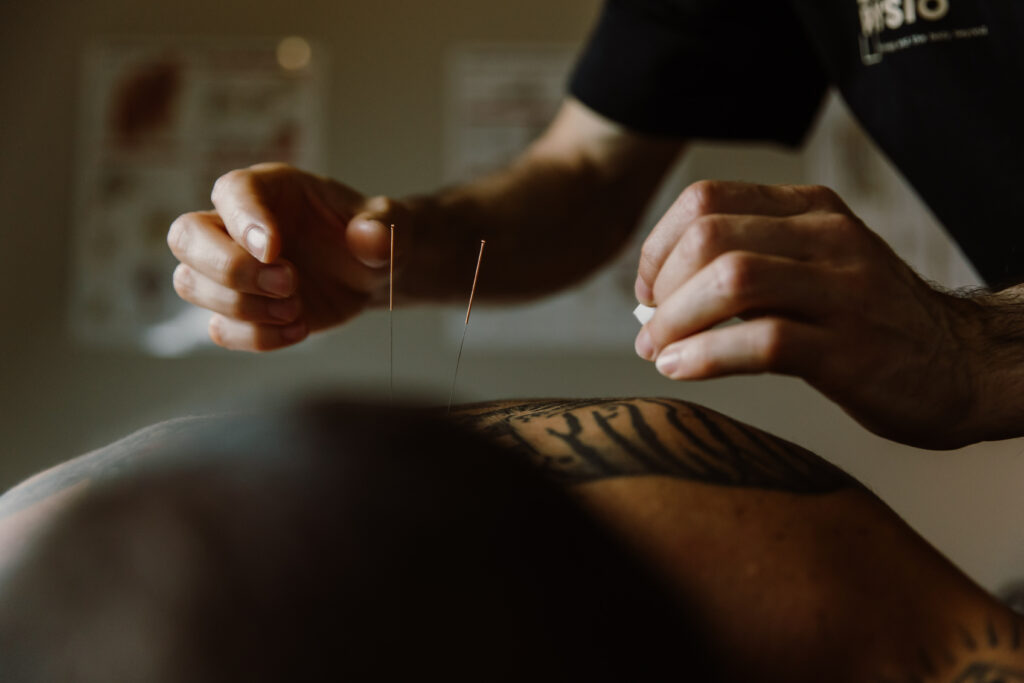
Book Dry Needling in Albert Park
At Results Based Physio in Albert Park, we’ll always explain what we’re doing and why — so you feel comfortable and informed every step of the way. We’ll talk you through whether dry needling suits your situation, answer any questions, and make sure you know exactly what to expect before and after every session.
Want to understand more about the science behind what these treatments do to your body? Read more on our Treatment Benefits page. You may also be interested in electro-dry needling, which combines dry needling with gentle electrical stimulation for an even stronger effect.
Book an appointment or get in touch to find out if dry needling could help you.
To find out what these treatments actually do to the body, please read the sections under our Treatment Benefits page.