
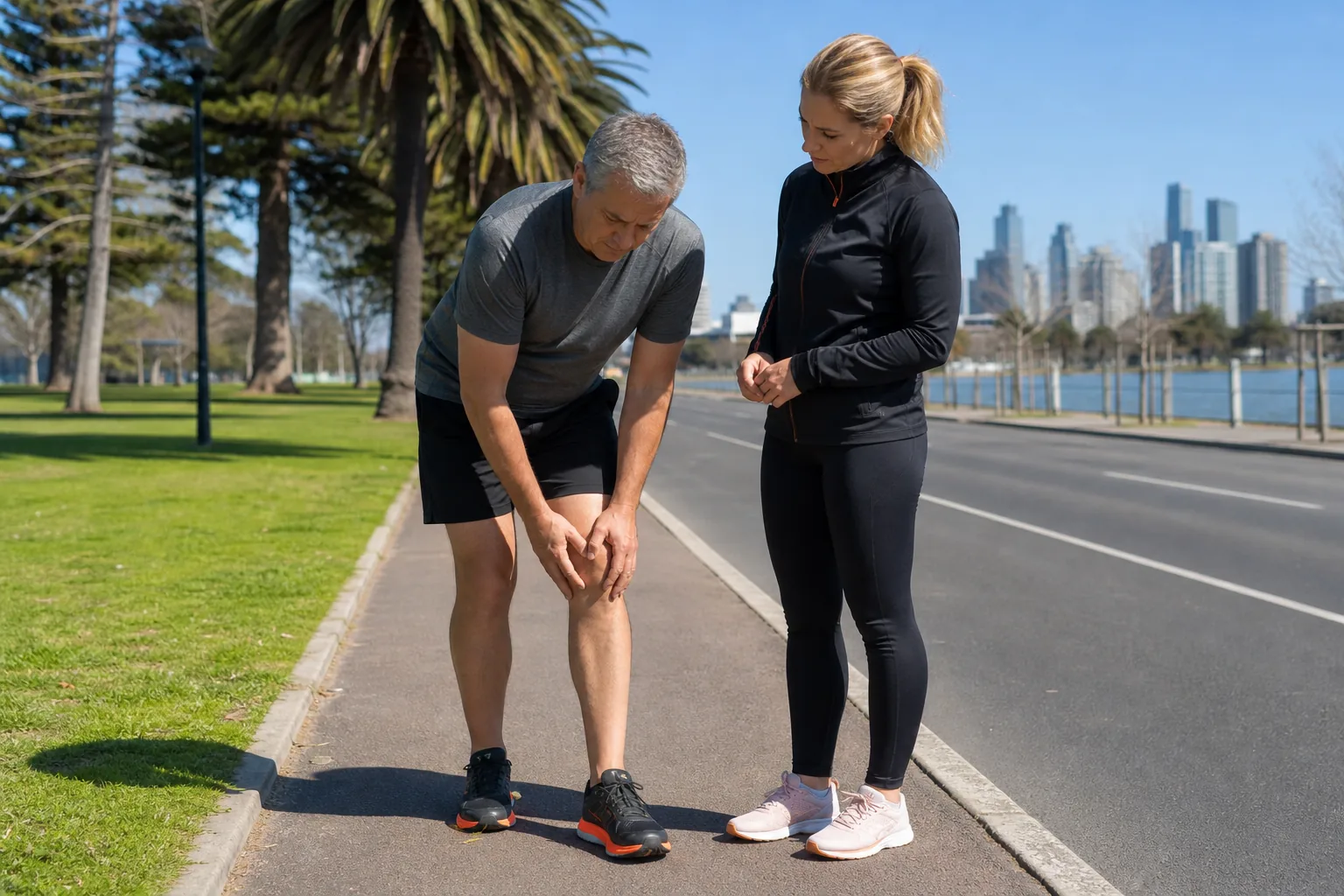
Got a knee that aches every time you climb stairs or hit the pavement? You’re not alone. Knee pain can stem from many places, and the right physio can help you move again. Below we break down the common causes, what to expect in an assessment, the hands‑on tools we use, and how you’ll get back to the activities you love.
What might be contributing to knee pain?
The knee is a hinge where the thigh bone, shin bone and kneecap meet, cushioned by cartilage and held by ligaments and tendons. Pain can arise from any of those structures, and the trigger often points you toward the likely culprit.
Osteoarthritis is the most common long‑term cause. The cartilage thins, making the joint feel stiff and achy, especially after activity or first thing in the morning. Exercise and strengthening can reduce pain for many people.
Patellofemoral pain, or “runner’s knee”, hurts around or behind the kneecap and flares with stairs, squatting or long sitting. It usually reflects how load is distributed across the kneecap rather than damage, so targeted hip and thigh strengthening often helps.
Meniscal tears, ligament sprains (ACL, MCL) and tendon overloads can cause sharp pain, catching or a feeling that the knee might give way. These injuries often follow a twist, fall or sudden change in direction.
Scans can be misleading, many people show cartilage changes or meniscus tears without pain. That’s why a physiotherapist looks at where the pain started, how it feels and what moves it.
When the pain limits daily tasks, it’s time to see a physio. Red flags, such as a hot, swollen knee, fever, or inability to bear weight, need urgent medical review.
How a physiotherapist assesses a sore or stiff knee
First, the therapist asks when the pain started, any injury history, what makes it better or worse, and how it affects your day. They also check swelling, past injuries and your overall health goals.
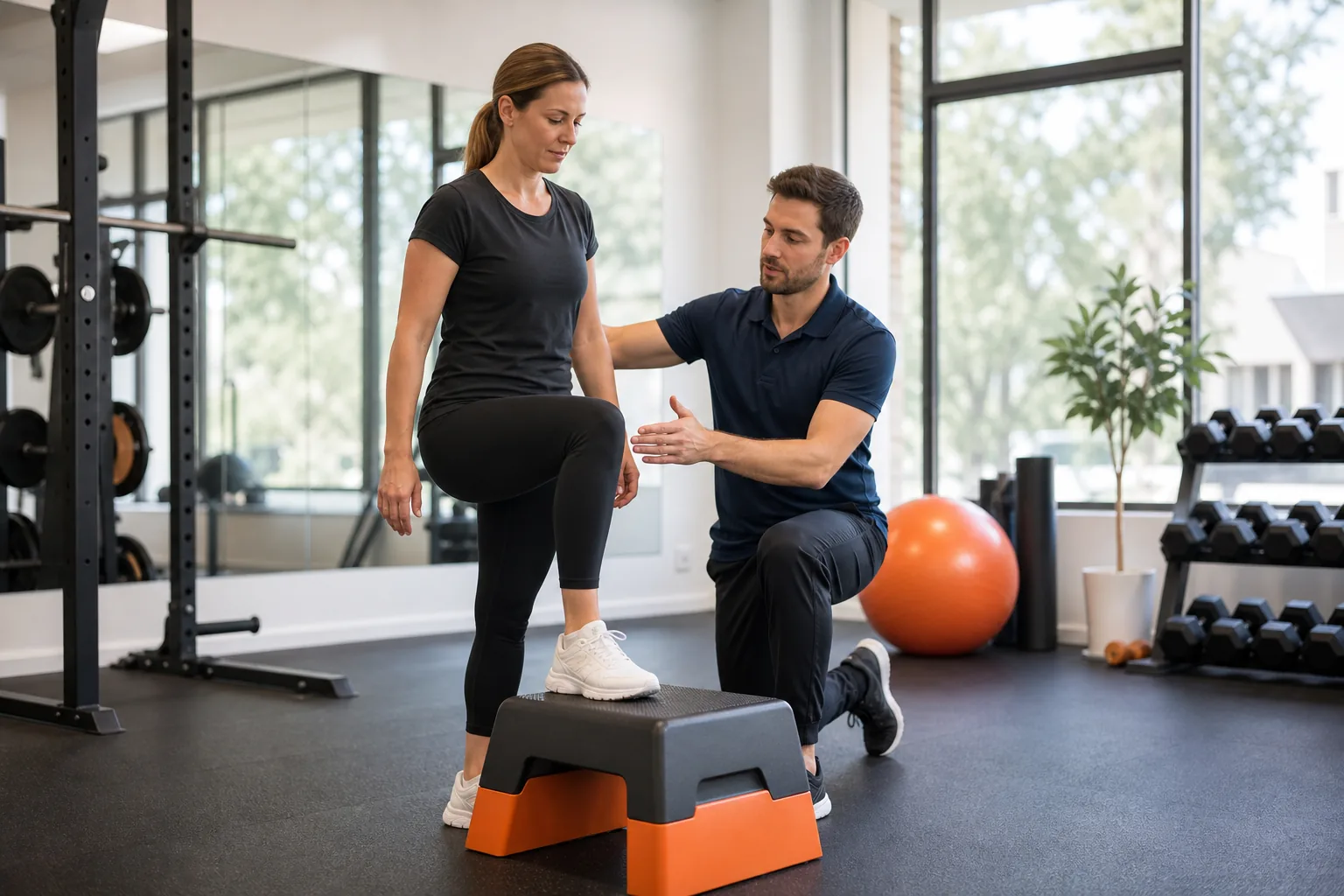
The physical exam looks at range of motion, joint stability, muscle strength around the hip, thigh and calf, and how you move through tasks like stair descent or sitting‑to‑standing. A common test is the single‑leg step‑down, which highlights weakness or control issues that might not show in a static exam.
Based on those findings, the clinician forms a working diagnosis. If the picture suggests a serious injury, a locked knee, rapid swelling or a clear fracture risk, they’ll recommend imaging or a medical review before starting a full rehab programme.
Education is part of the assessment. You’ll learn which activities aggravate the knee and what you can modify to keep moving without flare‑ups. The goal is to create a plan that matches your symptoms and the activities you want to return to.
In practice, the therapist may also look at hip and ankle mobility, because limited movement elsewhere can overload the knee.
What physiotherapy for knee pain can involve
At Results Based Physio we blend hands‑on techniques with a personalised rehab plan. Our toolkit includes dry needling, electro‑dry needling, deep tissue massage, instrument‑assisted soft‑tissue scraping (IASTM) and fire cupping. Each modality targets muscle tension, trigger points or scar tissue that can restrict knee motion.
Dry needling may help ease localised muscle tightness around the knee, and fire cupping is another hands-on option for tight, sore tissue. Both are used alongside structured exercise, not instead of it.
Exercise is the core of any knee programme. Early stages focus on low‑load movements, gentle knee bends, supported step‑ups, bridges and calf raises, to restore range without aggravating pain. As strength returns, the plan progresses to single‑leg squats, controlled lunges and functional drills that mimic your sport or work tasks.
We also incorporate movement retraining. Watching how you squat or go down stairs can reveal patterns that overload the knee, and the therapist provides cues to improve alignment and loading.
Results Based Physio’s approach mirrors best practice guidelines that recommend education, tailored exercise and weight management as first‑line care for knee osteoarthritis. We avoid unnecessary imaging and focus on active, patient‑centred rehab.
Appointments start at 30 minutes, so your assessment isn’t rushed. You’ll get a clear, upfront plan, how often we’ll see you and what milestones to hit, and the plan flexes as you improve.
We work closely with local sports doctors and chiropractors. If another discipline is better suited for a specific issue, we’ll refer you honestly.
Physio for Knee Osteoarthritis: What to Expect
Rehabilitation, activity and when to seek medical advice
Rehab moves from pain control to building the strength and confidence you need for everyday life and sport. Early weeks focus on comfortable movement, short walks, gentle bends and low‑load muscle activation. As pain eases, we increase distance, depth of squats and resistance in a step‑by‑step fashion.
Progression follows the principle of changing one variable at a time. You might add a few more reps, then a little more weight, then a deeper squat, but never all at once. That helps avoid flare‑ups.
Typical frequency is 1‑2 sessions per week, with a home program you’ll do on non‑clinic days. Progress depends on the cause of your pain and how consistently you do your exercises, so your physio will review it with you as you go.
If you notice any of the following, book a medical review right away: inability to take four steps, sudden locking, rapid swelling, a hot/red knee, or a loud pop followed by pain. These signs can indicate a fracture, infection or a major ligament tear that needs prompt medical assessment.
For chronic conditions like osteoarthritis, ongoing activity is key. Weight‑bearing exercise at a level your physio sets with you is generally safe, and regular movement helps maintain joint health.
When you finish the structured programme, we’ll set a maintenance plan, usually a few strength sessions a month and regular activity checks, to keep the knee strong.
Frequently asked questions
What does a physio session for knee pain usually involve?
A typical session starts with a brief review of your symptoms, followed by hands‑on assessment, targeted manual techniques and a set of exercises you’ll do at home. The therapist tailors the plan to your goals and adjusts it as you progress.
How many sessions will I need?
There is no set number. It depends on the cause of pain, your response to treatment and the activities you want to return to.
Will physiotherapy replace surgery?
Physiotherapy is a first‑line option for many knee conditions. Surgery may be considered for some injuries, or when symptoms stay severe despite a course of rehab and other non‑surgical care. Your physio can refer you for a medical opinion if needed.
Is dry needling safe?
Dry needling is performed by a registered physiotherapist using sterile needles. It may cause mild soreness afterwards, but serious complications are rare when done by a qualified practitioner.
Can I do the exercises at home?
Yes. Your therapist will give you a clear home programme and may suggest a simple app to log your workouts, which helps keep you on track.
Physio South Melbourne: Services and Appointments
Conclusion
If knee pain is holding you back, an assessment at Results Based Physio in Albert Park (Shop 4, 36/44 Mills Street, inside Superwell) can help work out what is driving it and set you on a clear rehab plan that combines hands-on treatment with exercise. The clinic sees people from Albert Park, South Melbourne, Middle Park, Port Melbourne and St Kilda West. Book an initial appointment online to start moving better.