
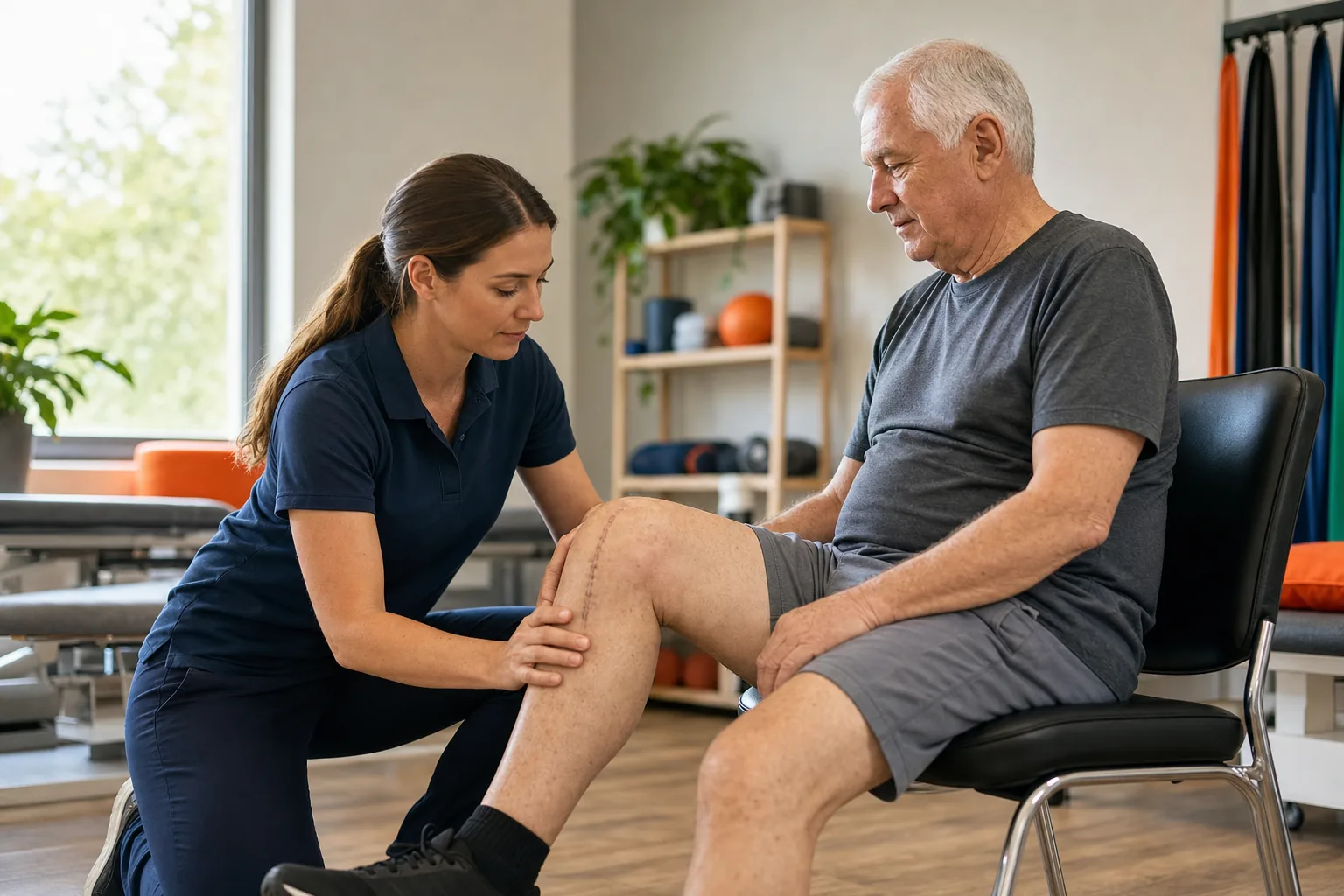
Just had a knee replacement and wondering what comes next? Physio after knee replacement usually starts with simple, guided movement, then builds towards walking and daily tasks. Your pace will depend on your surgery, health and your surgeon’s advice.
What physiotherapy does after knee replacement
Physiotherapy helps you practise moving your new knee while you recover from surgery. Early care often focuses on gently bending and straightening the knee, waking up the thigh muscles and getting up safely. Later, the focus can shift towards strength, balance and the tasks you want to manage at home.
Your physiotherapist works within the instructions from your surgeon and hospital team. Those instructions may cover weight-bearing, wound care and movement limits. Share them at your first appointment, along with any changes in your symptoms.
Rehabilitation may start before surgery. If your treating team recommends it, pre-surgery exercise can include thigh strengthening, calf stretches and repeated sit-to-stand practice. Walking, stationary cycling or stair practice may also suit some people. Pre-surgery exercise over the weeks before an operation may be one part of preparation, but your plan should fit your health and surgical advice.
After surgery, movement may begin once your care team considers it safe. Your physio can help you practise standing and walking with a frame or crutches. Early exercises may include ankle movement, gentle knee motion and thigh muscle contractions. The aim is to start moving within your care plan, not to force a particular distance or bend.
Over time, sessions may include exercises for the muscles that support the knee. The plan can also help you practise tasks such as standing from a chair or managing a step. If knee osteoarthritis was part of the reason for your operation, our guide to physio for knee osteoarthritis explains how care may address knee symptoms before surgery.
Recovery differs between people, so discuss the right rehabilitation setting with your doctor. That may be a hospital service, home-based care or a private physiotherapy clinic.
What to expect at a physiotherapy appointment
Your first appointment usually starts with a conversation. Your physiotherapist may ask when your surgery took place, what instructions you received and which activities feel difficult. Tell them about pain, swelling, sleep and any worries you have about moving.
They may check how your knee bends and straightens, how your thigh muscles work and how you stand or walk. The checks should match your current stage of recovery. You can ask why a movement is being assessed, and you can say if something feels too uncomfortable.
Bring your discharge notes or exercise plan if you have them. It can help to bring a list of medicines and relevant health conditions too. Most importantly, share any advice from your surgeon about weight-bearing or wound care. Your physio needs that information before suggesting changes to activity.
The appointment may include practice with a walking aid, a review of home exercises or advice on how to pace activity. Your physiotherapist can explain what each exercise is for and how to adjust it if it causes a marked increase in symptoms. The plan should be clear enough to follow at home.
At Results Based Physio, we combine hands-on care with an individual rehabilitation plan at our Albert Park clinic. After knee replacement, any hands-on technique would need to suit your stage of healing and fit your surgeon’s advice. Ask what a proposed technique involves and why it may be included in your care.
An appointment is also a chance to talk about the practical side of recovery. If getting to a clinic is hard, ask your hospital team or treating practitioner what care options are suitable for you. Don’t assume a virtual or home visit can replace an in-person assessment when your symptoms need direct review.
Before you leave, check that you know which exercises to do, how often to do them and what to do if symptoms change. If any part of the plan feels unclear, ask for it to be explained again.
Exercises and movement: how activity may progress
Exercise usually starts gently and builds in line with your recovery and clinical advice. A timetable can help you understand common phases, but it isn’t a promise or a test. Your surgeon’s instructions take priority.
Before surgery
If your care team recommends prehabilitation, you may practise basic strength and movement before the operation. This could include sit-to-stands, calf stretches or walking, depending on your ability. The goal is to prepare for the movements you’ll need after surgery, not to push through pain or fatigue.
Days 1 to 14
In hospital or soon after discharge, exercise may focus on circulation, thigh activation and comfortable knee movement. Ankle pumps involve moving your foot up and down. Quad sets involve gently tightening the front thigh muscle. A straight-leg raise may be added if you can do it with control and your clinician agrees.
Heel slides are another common movement. While lying or sitting, you slide the heel towards you to bend the knee, then ease it back. Your physio can show you how far to move. A firm stretch may be expected, but sharp or lingering pain is a reason to pause and ask what to change.
Weeks 2 to 6
As you settle into home or outpatient rehabilitation, your plan may include more walking and exercises for the thigh, hip and calf muscles. You may also practise standing from a chair or stepping up. The number of repetitions and the amount of effort should come from your care plan, not a general online schedule.
Your rehabilitation plan should be set with your care team and adjusted to your progress.
Weeks 6 to 12 and beyond
When your wound has healed and your care team agrees you’re ready, exercise may progress towards more functional strength and endurance. Your actual plan may differ, especially if you have pain, balance concerns or other health needs.
Our strength and injury rehabilitation work includes post-surgical recovery, including joint replacements. If you’re considering care with us, share your surgeon’s plan so any suggested exercise can be checked against it.
It’s common to adjust an exercise when the knee feels more sore or swollen afterwards. Tell your physio what changed and how long it lasted. That feedback helps them decide whether to reduce the range, change the exercise or review the plan.
Soreness, swelling and stiffness during recovery
Soreness and swelling can be part of recovery after a knee replacement. The knee may feel tight or stiff, and symptoms can vary through the day. A more active day may leave it feeling different from a quieter one. Your care team can help you judge what fits your recovery and what needs review.
Follow the hospital’s instructions for ice, compression and elevation. Keep a cloth between an ice pack and your skin, and follow any specific advice about how long to use it.
Gentle movement may also be part of your plan. Long periods in one position can make stiffness more noticeable, but don’t add extra exercise without checking that it suits your stage of recovery. If you’re unsure whether a sore knee needs rest or movement, ask your physiotherapist or surgical team.
Recovery may not match what someone expected. It’s reasonable to raise concerns and ask for clear information and follow-up support rather than trying to interpret every change alone.
Watch the wound and the skin around it as directed by your hospital team. Contact a doctor if you notice new redness, swelling or stiffness, or if you develop a fever. New or worsening calf pain or swelling should also be discussed promptly with your medical team. Seek urgent care for sudden or severe symptoms.
Don’t massage or apply products to the incision unless your surgical team says it has healed enough and gives you the go-ahead. Scar care can wait until the wound is closed and your clinician has confirmed what is appropriate. The same caution applies to taping or other treatments around the operated knee.

Getting back to walking, stairs and everyday activities
Walking practice often begins with support from a physiotherapist and a walking aid. Your team may show you how to use a frame or crutches before discharge. Keep using the aid for as long as your care team recommends. Rushing to walk without support can make a task less steady.
Early walking is usually about safe steps, not distance. Your physiotherapist may watch how you place your foot and whether you can manage turns. As you gain control, they can advise when to increase the distance or reduce support. If you start limping more or feel unsteady, tell them.
Stairs take practice too. Your physio may teach you a method that suits your current strength and the type of rail or steps at home. Practise only when your team says it’s appropriate. If your home has stairs, tell your care team before discharge so they can help plan for them.
Set up your home before surgery or before returning from hospital, if possible. Clear loose rugs and clutter from walking routes. Keep items you use often within easy reach, and arrange a stable chair with arms if you need support getting up. Ask someone to help with tasks that involve carrying items while you use a walking aid.
Progress with daily tasks may be uneven. Cooking a simple meal may feel manageable before a longer walk does. Break jobs into smaller parts and rest between them. Your physio can help you practise tasks that matter to you, such as standing from a low chair or stepping into a shower.
Driving, work and recreation need individual advice. Ask your surgeon when you can drive, especially if you need to brake quickly or are taking medicine that affects alertness. A return to work depends on the demands of your role. Ask before returning to sport or higher-impact activity, since the right timing depends on your operation and recovery.
Kneeling may feel uncomfortable after surgery. Ask your doctor or physiotherapist when it’s suitable for you, and follow their specific instructions.
We provide physiotherapy in Albert Park for people dealing with pain, stiffness or weakness that limits daily activity. Our Albert Park physiotherapy approach combines hands-on care with rehabilitation. After joint replacement, ask whether an assessment fits your current medical plan.
Why rehabilitation plans differ from person to person
Two people can have the same operation and still need different rehabilitation plans. Your movement before surgery, current strength, other health conditions and home setup can all affect what you can manage. Your goals matter too. One person may want to walk around the shops, while another may need to manage stairs at work.
Symptoms also change what’s suitable. If pain or swelling rises after a particular activity, your physio may alter its range, effort or timing. If you have balance concerns, walking practice may need more support. These adjustments aren’t signs of failure. They help keep the plan in step with your current ability.
Access and support matter as well. Some people can attend a clinic, while others may need hospital-based or home support during an early stage. Ask your surgeon or hospital team which setting is appropriate. If travel is hard, ask whether any remote check-in can be part of care, while recognising that some assessments need direct review.
Rehabilitation is not only a list of exercises. A physio may review your walking, your knee movement and how you handle everyday tasks. Hands-on care may be discussed as one part of an individual plan, but it should not replace surgical follow-up or the exercises and activity advice your care team recommends.
We offer hands-on physiotherapy and individual recovery plans. Our services include dry needling, deep tissue massage, cupping, scraping and joint techniques. These methods aren’t automatically suitable for a recent surgical knee. Your treating team should guide when, or whether, any hands-on approach is appropriate.
Questions about electrical stimulation, a continuous passive motion machine, taping or pool-based exercise are best raised with your surgeon or physiotherapist. Their suitability depends on your operation, wound healing and medical advice. Don’t add a device or treatment just because it appears in a general recovery plan.
Nutrition and supplements can raise questions during healing. Eat in line with your usual medical advice, and ask your GP or treating team before adding a supplement, particularly if you take medicines or have other health conditions. Don’t stop prescribed medicines or change your care plan without discussing it with the clinician who prescribed it.
A useful plan has clear steps and room to change. At each review, tell your physio what has become easier and what still feels hard. That helps keep the focus on your needs rather than on a fixed calendar.
Frequently Asked Questions About Physio After Knee Replacement
When does physiotherapy start after knee replacement?
Physiotherapy may start in hospital once your care team considers it safe to move. Early sessions often include standing or walking with support, plus simple ankle, thigh and knee movements. The exact timing depends on your surgery and health. Follow the instructions from your surgeon and hospital team rather than copying someone else’s schedule.
How long does rehabilitation take after knee replacement?
Rehabilitation often moves through early movement, home exercise and later strength or activity work over several weeks and beyond. There isn’t one timeline that fits everyone. Your starting movement, symptoms and daily needs can affect progress. Ask your physiotherapist how your plan will be reviewed and what signs will guide each change.
Can I put weight on my leg after knee replacement?
Your surgeon or hospital team will tell you how much weight you can put through your leg. Some people are allowed to bear weight early, while others may have specific restrictions. Use your walking aid as instructed, and ask your care team before changing how much support you use.
When can I drive after knee replacement?
Ask your surgeon before driving again. You need to be able to control the vehicle and respond quickly, and some medicines can affect alertness. The operated knee and the type of vehicle may also matter. Don’t rely on a general number of weeks as permission to drive.
When should I contact a doctor during recovery?
Contact your doctor or surgical team if you notice new redness, swelling or stiffness around the knee, or if you develop a fever. Tell them promptly about new calf pain or swelling as well. Seek urgent medical care for sudden or severe symptoms. If you’re unsure, ask rather than waiting for a routine physio appointment.
Getting help with rehabilitation in Albert Park
If knee stiffness or weakness is making everyday tasks hard, ask your surgical team whether a physiotherapy assessment suits your current stage. Our clinic is at Shop 4, 36/44 Mills Street, Albert Park, inside Superwell, and we see people from nearby areas including South Melbourne. You can book an assessment at our Albert Park clinic to talk through your needs and whether our approach fits your surgeon’s advice.
