
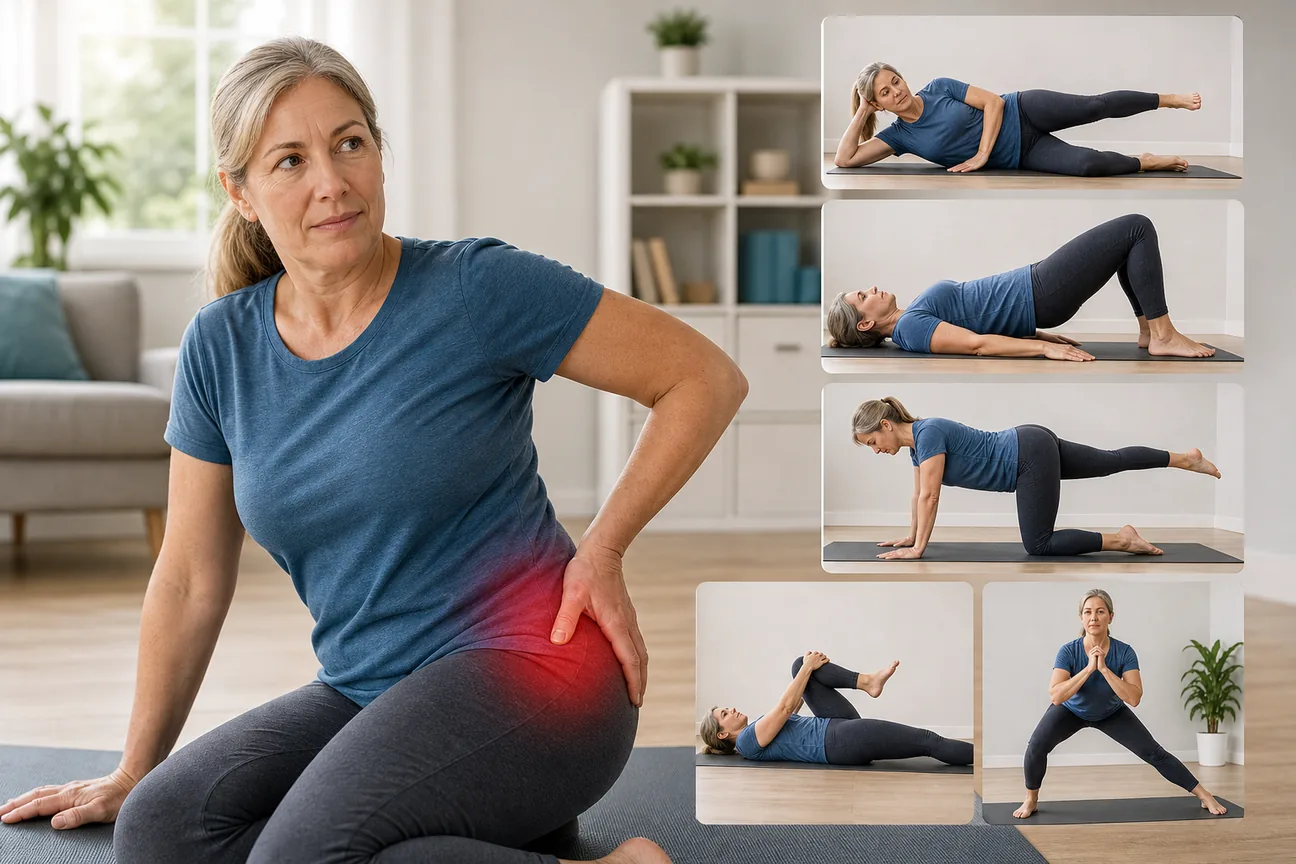
Hip bursitis can make walking, climbing stairs or even sitting feel tough. If you’re fed up with the ache, you’ll want movements that gently load the joint and build strength. Below are five hip bursitis exercises, who they suit and what to watch out for.
1. Gluteal isometric hold — a low‑movement way to load the hip
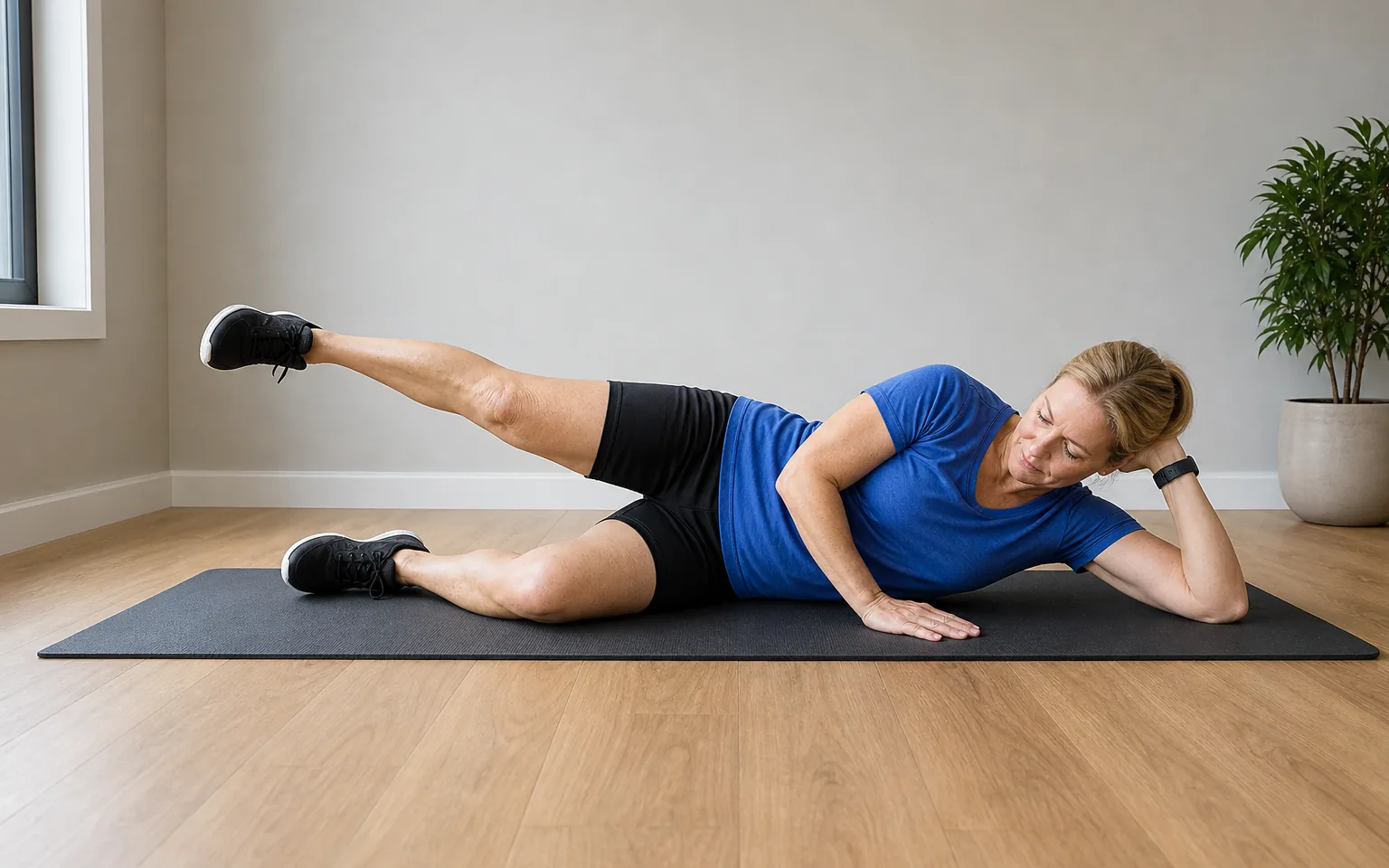
Gluteal isometric hold is a static squeeze of the gluteus medius while you stay still. It’s best for people who need a gentle start because it doesn’t require the leg to move much. You lie on your side, bend the top knee slightly, and press the upper hip up a few centimetres. Hold for 10‑15 seconds, rest, then repeat 8‑10 times.
A physiotherapist can help you decide whether this is a suitable starting point. Related reading: manual therapy.
2. Glute bridge — a supported hip‑extension option
Glute bridge lifts the hips off the floor while the shoulders stay planted. It targets the gluteus maximus, which helps unload the outer hip and the bursa. Folks who can bear weight on both legs but need more activation than an isometric hold will find it useful.
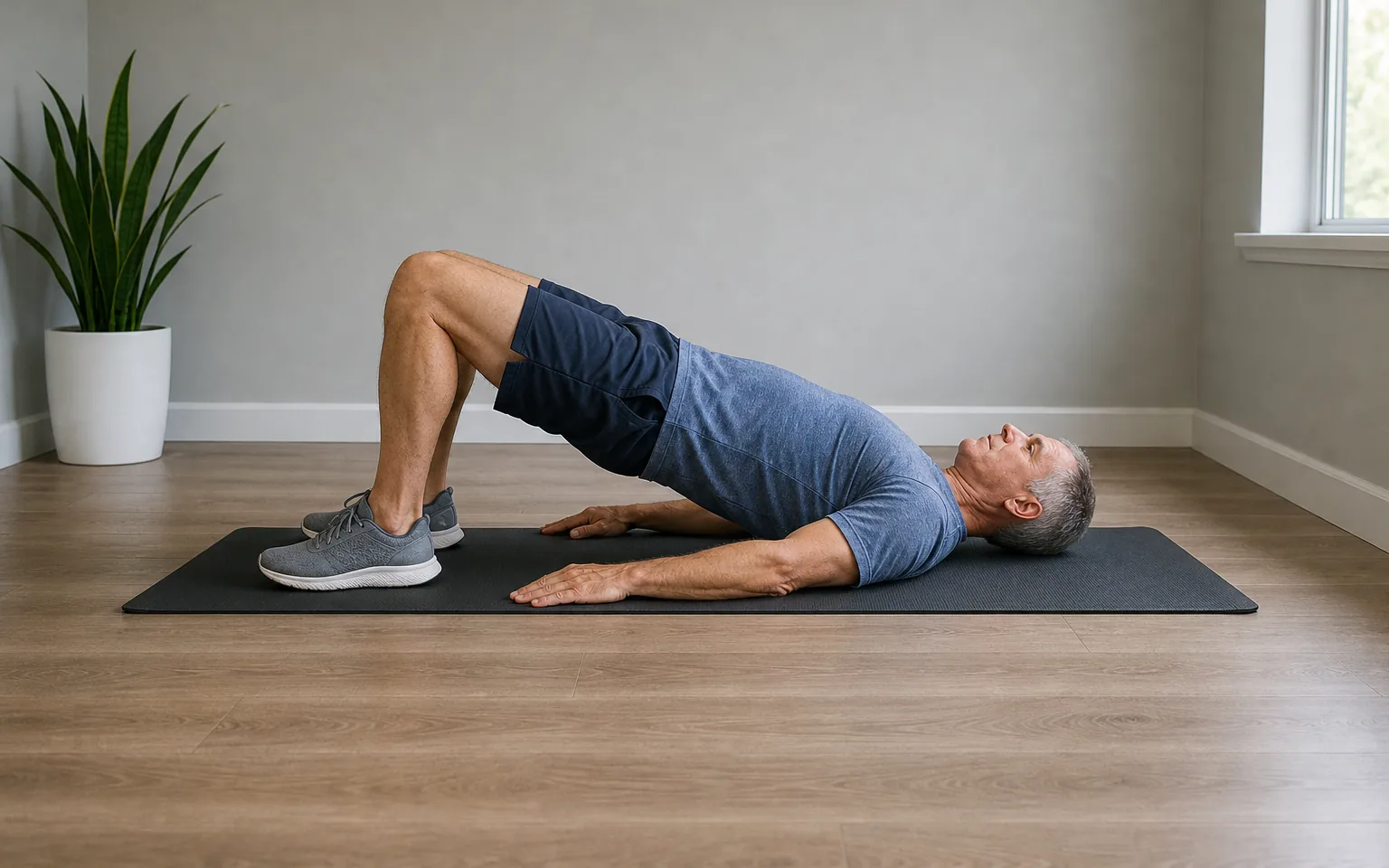
Start on your back, knees bent, feet hip‑width apart. Press through the heels, squeeze the glutes, and raise the pelvis until a straight line runs from shoulders to knees. Hold for two seconds, then lower slowly. Aim for three sets of 10‑12 reps.
3. Sit‑to‑stand — practising a useful everyday movement
Sit‑to‑stand mimics the action of getting up from a chair, a key daily task. It trains hip extension, knee extension and core stability all at once. People who are already able to sit and stand with a little help will benefit.
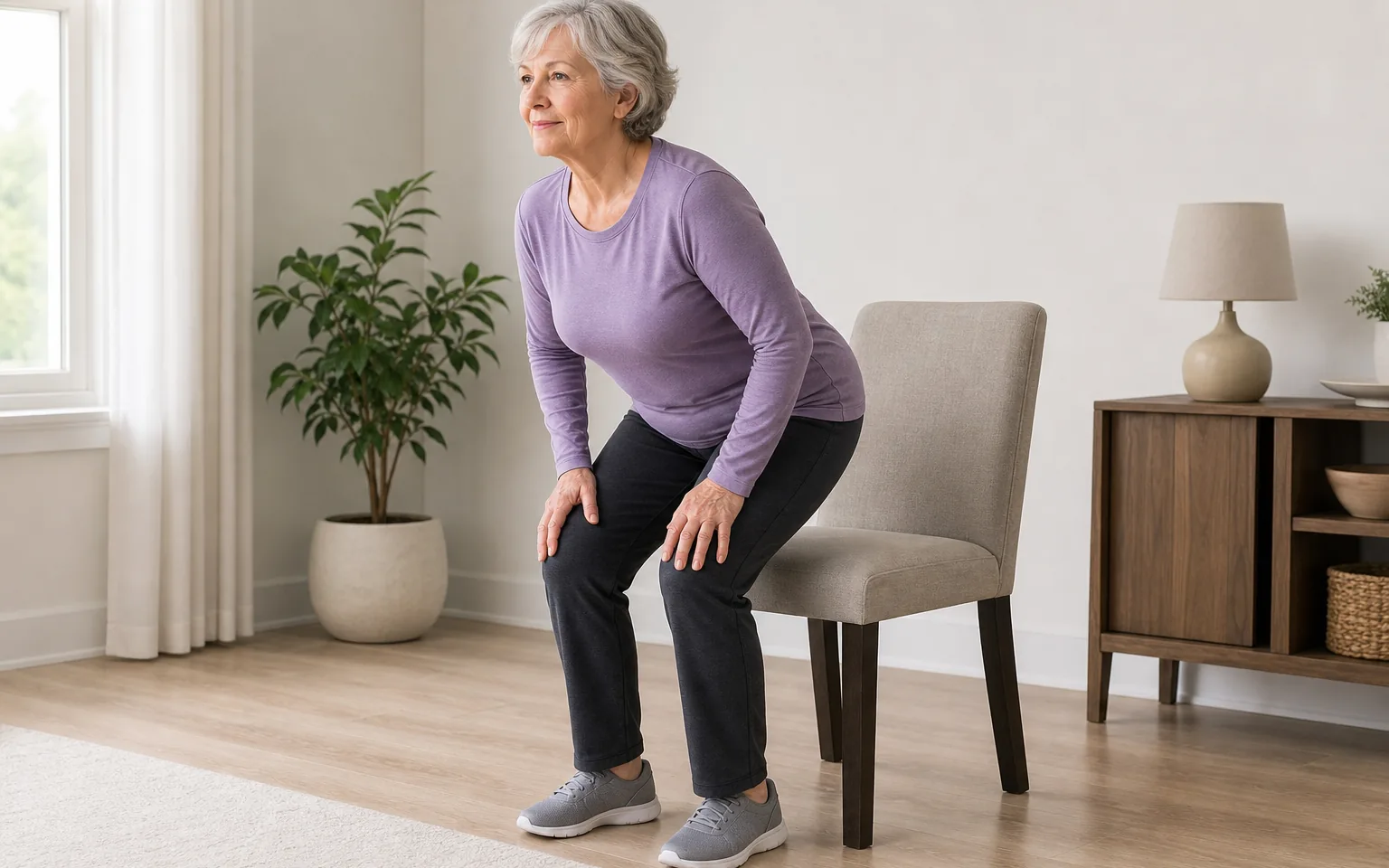
Begin seated on a sturdy chair, feet flat on the floor, hands on thighs for balance. Push through the heels, lean forward slightly and stand up, keeping the spine neutral. Pause, then sit back down with control. Do 8‑10 repetitions, focusing on a smooth rise and sit.
Sit‑to‑stand is a functional task that practises getting up from a chair. It can be included in bursitis rehabilitation to practise bearing weight through the hip during an everyday movement.
4. Standing hip abduction — a controlled side‑leg movement
Standing hip abduction lifts the leg out to the side while you balance on the opposite foot. It isolates the gluteus medius, the muscle that keeps the pelvis level. This exercise is good for those who can stand unaided but need more side‑strength.
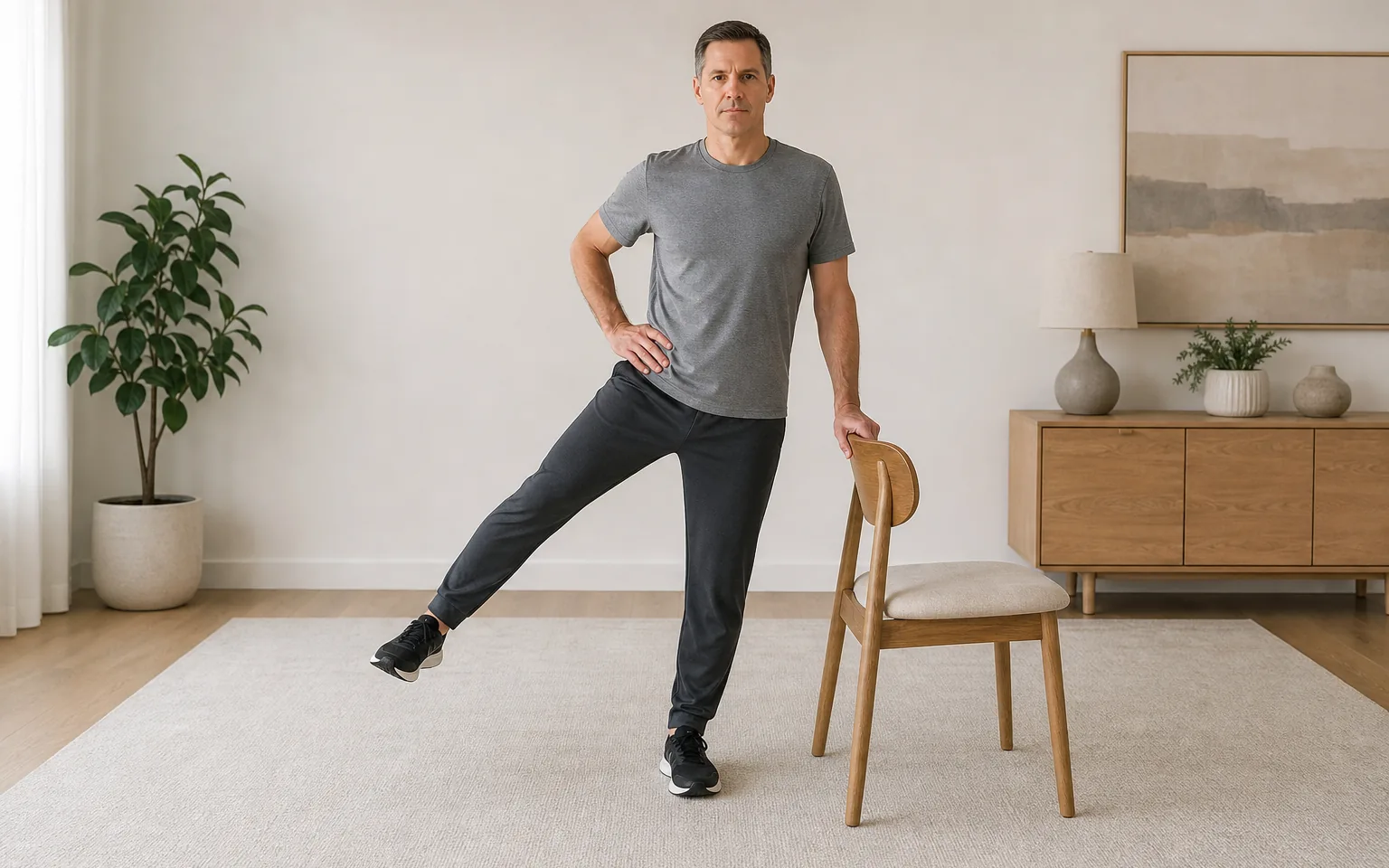
Stand tall, weight on the right foot, left leg straight. Slowly raise the left leg to about 30‑45 degrees, keep the hips square, then lower. Perform 12‑15 reps each side, resting briefly between sets.
Choosing the right physio matters. Read more about choosing a physiotherapist.
5. Low step‑up — a gradual option for building step confidence
Low step‑up uses a short platform to practice lifting the leg and straightening the hip. It translates well to stairs, ramps and curb‑side steps. Ideal for people who can handle a bit of load but still need a safe range of motion.
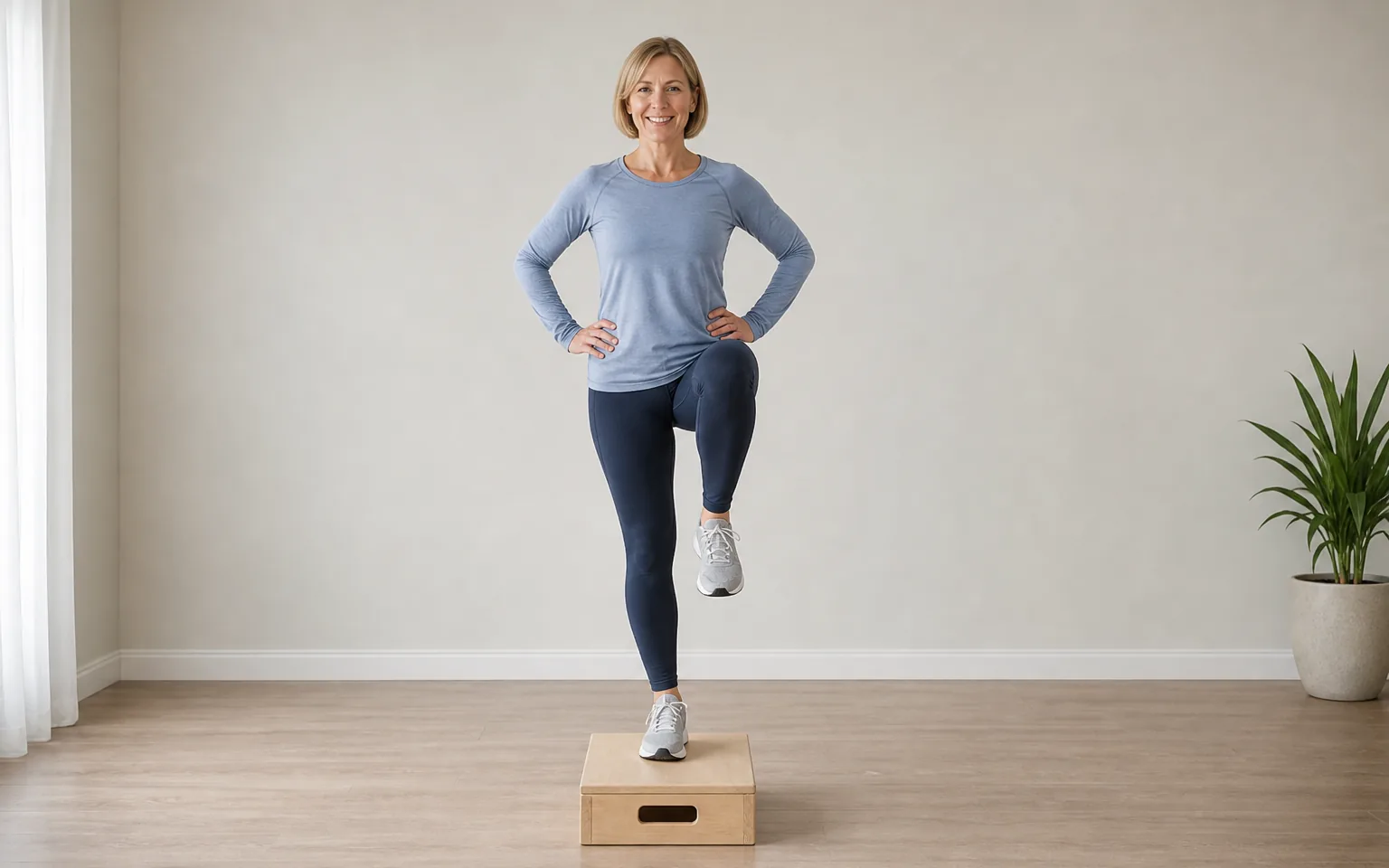
Place a sturdy step about 10‑15 cm high. With the right foot on the step, press through the heel, lift the left knee up, then step down. Keep the torso upright and avoid leaning forward. Do 2‑3 sets of 8‑10 reps each side.
A physiotherapist can help tailor step‑ups to your current ability.
How these five hip exercises differ
| Exercise | Movement type | Equipment | Typical reps | Key benefit |
|---|---|---|---|---|
| Gluteal isometric hold | Static contraction | None | 8‑10 × 10‑15 s | Gentle load, good for early stage |
| Glute bridge | Hip extension | Mat or floor | 3 × 10‑12 | Activates glute max, improves power |
| Sit‑to‑stand | Functional rise | Chair | 8‑10 × 2‑3 | Transfers to daily tasks |
| Standing hip abduction | Side‑leg lift | None (optional band) | 12‑15 × 2 | Stabilises pelvis, reduces limp |
| Low step‑up | Step‑up | Low step or bench | 2‑3 × 8‑10 | Builds confidence on stairs |
Frequently asked questions
Can I do these exercises if I have a recent hip injury?
It depends on the injury. If you’ve just had surgery or a severe strain, you should get a physio assessment first. Gentle movements may be okay, but higher‑load steps could aggravate tissue.
How often should I practice hip bursitis exercises?
Most clinicians suggest 3‑4 sessions per week, giving the hip a day of rest between tougher days. Consistency matters more than intensity for long‑term relief.
Should I use ice or heat after these exercises?
Ice can help calm acute soreness right after a session, while gentle heat before you start may loosen tight muscles. Listen to your body and avoid extreme temperatures.
When should I see a doctor instead of a physio?
If you notice sudden sharp pain, swelling, fever, or loss of strength, book a GP visit promptly. Red‑flag signs like inability to bear weight or worsening night pain also need medical review.
Do I need any special equipment for these exercises?
Most of the moves need only a sturdy chair, a low step and a flat surface. If you want extra challenge, a resistance band can be added to the hip abduction.
Getting help with hip pain in Albert Park
If you’re unsure which exercise fits your routine, a personalised assessment at Results Based Physio can sort it out. Book an appointment to discuss a plan that matches your goals and current level of comfort: online booking portal.
